
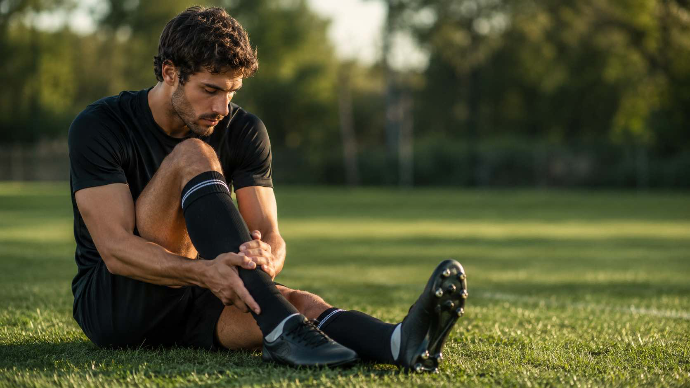
A full season of soccer asks a lot of the body. Between the running volume, constant changes of direction, kicking, and physical duels for the ball, most players are carrying some level of accumulated fatigue by mid-season — whether they notice it or not.
Whether you play NPL WA, Football West State League, or social football around Perth, this article covers the injuries we see most often during the season, what a smart weekly maintenance routine looks like, and how to tell the difference between normal fatigue and something that needs proper treatment.
Why Soccer Is So Demanding on the Body
A 90-minute match involves far more than just running:
- High running volume — players commonly cover 8–12km per match depending on position
- Repeated sprinting and rapid deceleration, often dozens of times per game
- Sharp changes of direction while cutting, dribbling, and defending
- Kicking mechanics that place repetitive load through the hip flexors, groin, and lower back
- Physical contests for the ball, increasing the risk of contact injuries
Unlike a single heavy training session, this load repeats weekly across an entire season — which is exactly why niggles tend to build rather than appear out of nowhere.
The Most Common Soccer Injuries We See in Perth
Hamstring Strains
The most common injury in soccer worldwide, typically occurring during high-speed sprinting. Fatigue and tightness from previous matches significantly increase the risk.
Groin and Hip Flexor Strains
Repetitive kicking and quick changes of direction place heavy load through the groin. Players who carry tightness here from week to week are far more prone to a strain.
Ankle Sprains
Often caused by awkward landings or contact during a tackle. Ankles that haven't fully recovered from a previous sprain are significantly more likely to roll again.
Achilles and Calf Tightness (Overuse)
The repetitive nature of running and sprinting over a long season can lead to building tightness through the calf and Achilles — a common cause of nagging, hard-to-shift soreness later in the season.
Knee Injuries, Including ACL
Pivoting, cutting, and contact all place load through the knee. Suspected ligament injuries need urgent assessment by a physio or sports doctor — this isn't something hands-on therapy alone should manage.
Lower Back Tightness
Repetitive kicking and twisting through the trunk often leaves players with low-grade back tightness that quietly affects power and mobility without ever becoming "an injury" on its own.
Weekly Maintenance: What Keeps Players on the Park
The players who make it through a full season injury-free are rarely the ones who are just "tougher" — they're usually the ones with a consistent maintenance routine, rather than reactive treatment only when something goes wrong.
A few principles that matter most during the season:
- Treat tightness before it becomes a strain. Restricted hip, hamstring, or calf movement is an early warning sign worth acting on, not waiting out.
- Build in regular remedial massage, not just a one-off session after a bad week. Weekly or fortnightly treatment keeps muscle tissue better prepared for match load.
- Use dry needling for stubborn trigger points that don't release with massage or stretching alone — common in calves, hip flexors, and the lower back for soccer players.
- Don't skip recovery after a tough match, even if nothing feels obviously wrong. The accumulated load of a hard game still needs to be addressed.
When Soft Tissue Therapy Helps — and When You Need a Referral
Most of what we see week to week — tight hamstrings, sore calves, restricted hips, a stiff lower back — responds well to remedial massage, dry needling, and movement work.
But suspected ACL or ligament tears, fractures, and head knocks need to be properly assessed by a GP, physio, or sports doctor before any hands-on treatment. At BodySens, we'll always be upfront if something needs a referral rather than another round of massage — getting the right injury seen by the right professional matters more than keeping every appointment in-house.
How BodySens Studio Supports WA Soccer Players Through the Season
At BodySens Studio, we work with soccer players throughout the season, not just when something flares up. A typical in-season plan includes:
- Regular remedial massage to manage the accumulated load of weekly training and matches
- Dry needling for stubborn tightness in the hips, calves, and lower back
- Functional movement work to address imbalances before they turn into strains
- Honest guidance on when a more serious injury needs to be referred on
Our clinic is located in Osborne Park, close to Innaloo, Stirling and Wembley, making it easy to fit a session in around training and match days across Perth's northern suburbs.
Private health fund rebates are available for remedial massage sessions.
Book your session today and stay ahead of the season (select Remedial massage).
Related articles: