
DOMS is not an injury. It's a normal physiological response to physical stress, particularly after unfamiliar or high-intensity exercise. But "normal" doesn't mean you have to just wait it out. At BodySens Studio in Osborne Park, we work with everyday athletes and active Perth locals every week on exactly this — using the right combination of ice, heat, and remedial massage to get you moving comfortably again, faster.
Here's what actually works, and when:
What Is DOMS and Why Does It Happen?
When you exercise, especially with eccentric movements like squats, lunges, hill running, or heavy lifting, you create microscopic tears in your muscle fibres. This is a completely normal part of building strength. The soreness you feel 12 to 72 hours later is the result of inflammation, fluid accumulation, and your body's repair process kicking in.
DOMS typically peaks around 24–48 hours post-exercise and gradually resolves over three to five days. The issue is that during that window, reduced range of motion, muscle tightness, and discomfort can affect your next session — and if you're training regularly, that adds up.
Ice: When It Actually Helps (and When It Doesn't)
Ice (cryotherapy) constricts blood vessels and reduces nerve conduction velocity, which is why it's effective at numbing sharp, acute pain and reducing localised swelling.
Ice is most useful when:
- You have acute swelling following a specific injury (rolled ankle, muscle strain)
- You need to reduce sharp, localised pain immediately after impact
- You're managing inflammation in a joint rather than general muscle fatigue
Ice is less effective for general DOMS. The inflammation driving DOMS is part of the healing process — suppressing it aggressively with prolonged icing can actually slow recovery. If you've ever felt great immediately after an ice bath but still woken up stiff the next morning, this is why.
Practical guideline: Use ice in the first 24–72 hours for a specific acute injury. For general post-exercise muscle soreness, it's not your best tool.
Heat: The Recovery Tool People Underuse
Heat increases blood flow, relaxes muscle tissue, and helps break the cycle of tightness and guarding that often develops after intense exercise. It's particularly effective once the acute inflammatory phase has passed.
Heat works well for:
- General muscle stiffness and tension (especially 48+ hours post-exercise)
- Chronic tightness in postural muscles (neck, upper back, lower back)
- Preparing muscles before a remedial massage session
- Promoting circulation during the recovery phase
Heat is not ideal when:
- There is visible swelling or a suspected acute injury
- Skin is irritated or broken
- You're dealing with a joint inflammation flare-up
Practical guideline: A heat pack or warm bath 48 hours after intense training is one of the most underrated recovery tools — simple, accessible, and genuinely effective.
Remedial Massage: Where the Real Work Happens
Ice and heat address the symptoms of muscle soreness. Remedial massage addresses the tissue itself.
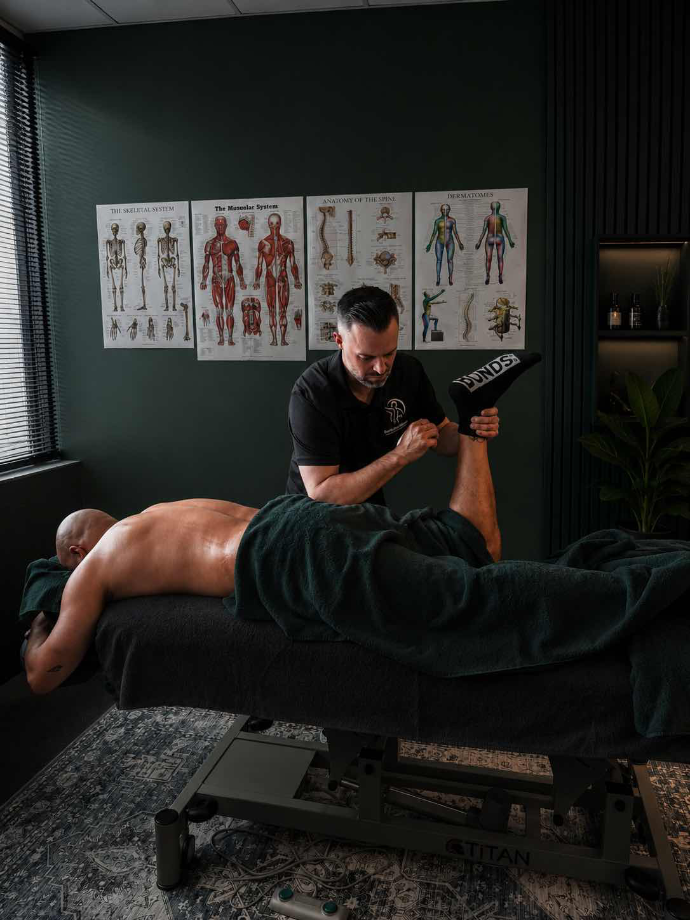
At BodySens, our remedial massage approach to muscle recovery isn't a general relaxation treatment. It's targeted, clinical, and designed around what's actually happening in your body at a structural level.
Here's what hands-on treatment does that passive recovery can't:
1. Breaks up adhesions and reduces tension in specific muscle groups Intense training — particularly strength work — creates localised areas of tension and myofascial restriction. Skilled palpation and targeted pressure release that tension in a way that heat or stretching alone cannot replicate.
2. Stimulates lymphatic drainage and circulation Massage mechanically moves fluid through the tissue. This accelerates the clearance of metabolic waste products (including lactate and inflammatory byproducts) that accumulate during heavy exercise.
3. Reduces neural tone and guarding One of the less-discussed effects of DOMS is the nervous system's protective response — involuntary muscle guarding that limits your range of motion. Remedial massage directly addresses this by down-regulating neural tension, helping you recover functional movement faster.
4. Identifies issues before they become injuries This is one of the most valuable aspects of regular treatment. In a session, we can detect areas of compensatory tension, overuse, or altered movement patterns that you may not be aware of — and address them before they escalate into an actual injury.
How to Combine All Three for Best Results
For most active people dealing with post-training DOMS, this is the sequence that works:
| Timeframe | Recommended approach |
|---|---|
| Immediately post-session | Cool down properly, hydrate, light movement |
| 0–24 hours | Rest, ice only if there's specific acute swelling |
| 24–48 hours | Gentle movement, warm bath or heat pack |
| 48–72 hours | Ideal window for remedial massage |
| Ongoing (weekly/fortnightly) | Regular treatment to prevent accumulation of tension |
The 48–72 hour window is important. Too early, and the inflammatory phase hasn't resolved enough for deep tissue work to be appropriate. Too late, and compensatory patterns are already setting in.
When to See a Remedial Massage Therapist
General DOMS that resolves within five days is normal. But there are situations where professional assessment and treatment become important:
- Soreness that doesn't improve after five to seven days
- Sharp, localised pain rather than diffuse muscle ache
- Pain that worsens with movement rather than easing
- Swelling, bruising, or significant loss of range of motion
- Recurring soreness in the same area after training
If any of these apply, what you're experiencing may not be DOMS — and it's worth having a remedial massage therapist or sports rehab specialist assess what's going on.
Ready to Recover Like a Pro?
At BodySens Studio in Osborne Park, we specialise in remedial massage and sports rehabilitation for active Perth locals — from weekend warriors to competitive athletes. Whether you're dealing with post-training DOMS, a recurring niggle, or you simply want to maintain your body at its best, we'll build a treatment approach around your goals.
📍 Osborne Park, Perth WA 📞 +61402 934 334 📅 Book HERE
BodySens Studio offers remedial massage, sports rehabilitation, and lymphatic drainage in Osborne Park, Perth. Our therapists work with clients across the northern suburbs including Stirling, Balcatta, Scarborough, and Innaloo.