
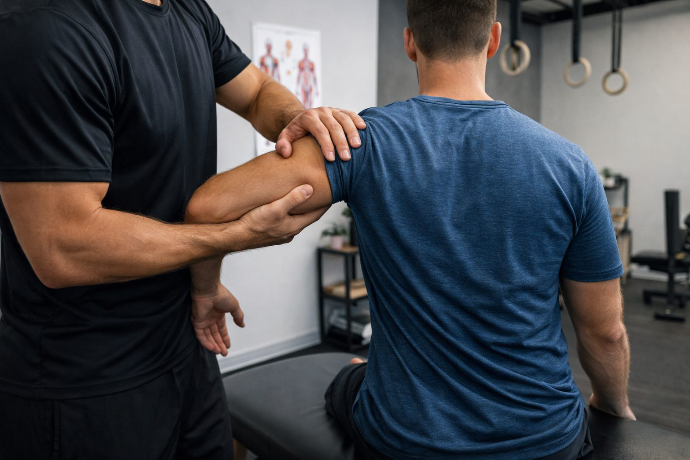
What Is Sports Rehabilitation?
Sports rehabilitation is more than just treating pain. It’s a structured process designed to:
- Reduce pain and irritation
- Restore mobility and strength
- Improve movement quality
- Rebuild confidence in the body
- Return you to full performance
Whether you’re a runner, gym-goer, or weekend athlete, the goal isn’t just to get you “feeling better”, it’s to get you performing better than before.
Why Most Rehab Strategies Fail
Many athletes and active individuals fall into the same traps during recovery:
1. Focusing Only on Pain Relief
Massage, stretching, and rest can help in the early stages, but they don’t fix the root cause.
If strength, control, and movement mechanics aren’t addressed, the problem often comes back once you return to normal activity.
2. Losing Confidence in Movement
Pain isn’t just physica, it changes how you move and how you think about movement.
Many people don’t return to training not because they can’t, but because they’ve lost confidence in their body.
They start to:
- Avoid certain movements
- Train around the injury instead of rebuilding it
- Feel hesitant or guarded during exercise
Over time, this leads to compensation patterns, reduced capacity, and ongoing discomfort.
The longer this goes on, the harder it becomes to return to full performance.
Rehabilitation isn’t just about fixing tissue, it’s about restoring confidence under load.
3. Lack of Progression
Rehab isn’t static. What helps in week 1 won’t be enough in week 4.
Without a clear progression, the body doesn’t fully adapt. Strength, resilience, and control need to be rebuilt step by step.
Stopping too early or staying at the same level, often leads to plateau or reinjury.
What a Successful Rehab Strategy Looks Like
A well-designed rehabilitation plan follows clear stages:
Phase 1: Pain & Load Management
- Reduce irritation
- Modify training and daily activities
- Use hands-on therapy to settle symptoms
Phase 2: Restore Movement
- Improve joint mobility
- Address muscle imbalances
- Reintroduce controlled, pain-free movement
Phase 3: Strength, Control & Confidence
- Build strength in the injured area
- Reinforce proper movement patterns
- Develop control under increasing load
- Gradually reintroduce movements that feel “unsafe”
At this stage, the mental aspect becomes critical.
After an injury, many people are not just physically limited, they’re hesitant. They avoid certain movements, hold back, or move differently out of fear.
If this isn’t addressed, the body never fully returns to normal.
Rehabilitation isn’t just about getting stronger, it’s about restoring confidence in your body under load.
Phase 4: Return to Performance
- Gradual exposure to sport-specific movements
- Increase intensity and complexity
- Rebuild confidence in real-life situations
This is where physical capacity and mental confidence come together. You’re not just able to move, you trust your body again.
The BodySens Approach: Rehab + Movement Integration
What makes our approach different is the integration of:
- Remedial massage therapy
- Movement assessment
- Strength and conditioning principles
We don’t just treat where it hurts, we look at how your whole body moves.
For example:
- Shoulder pain can be linked to poor thoracic mobility
- Knee issues often relate to hip strength and control
- Lower back pain is commonly tied to load management and movement patterns
By combining hands-on treatment with movement retraining, we don’t just reduce pain, we build a stronger, more resilient body.
Who This Is For
This approach is ideal for:
- Athletes returning from injury
- Active individuals dealing with recurring pain
- Office workers who want to stay active without discomfort
- Anyone who wants to move better and prevent future injuries
Why Strategy Matters More Than Effort
You can stretch more. Train harder. Rest longer.
But without the right strategy, you’re just guessing.
The difference between recurring injury and long-term performance comes down to having a clear, structured plan tailored to your body.
Ready to Recover Properly?
If you’re dealing with pain or an injury, don’t leave your recovery to chance.
At BodySens Studio in Osborne Park, we help you:
- Recover with a clear plan
- Move with confidence
- Build long-term resilience
Book a session today and start your recovery with a strategy that actually works.